The Vibe Coding Shift
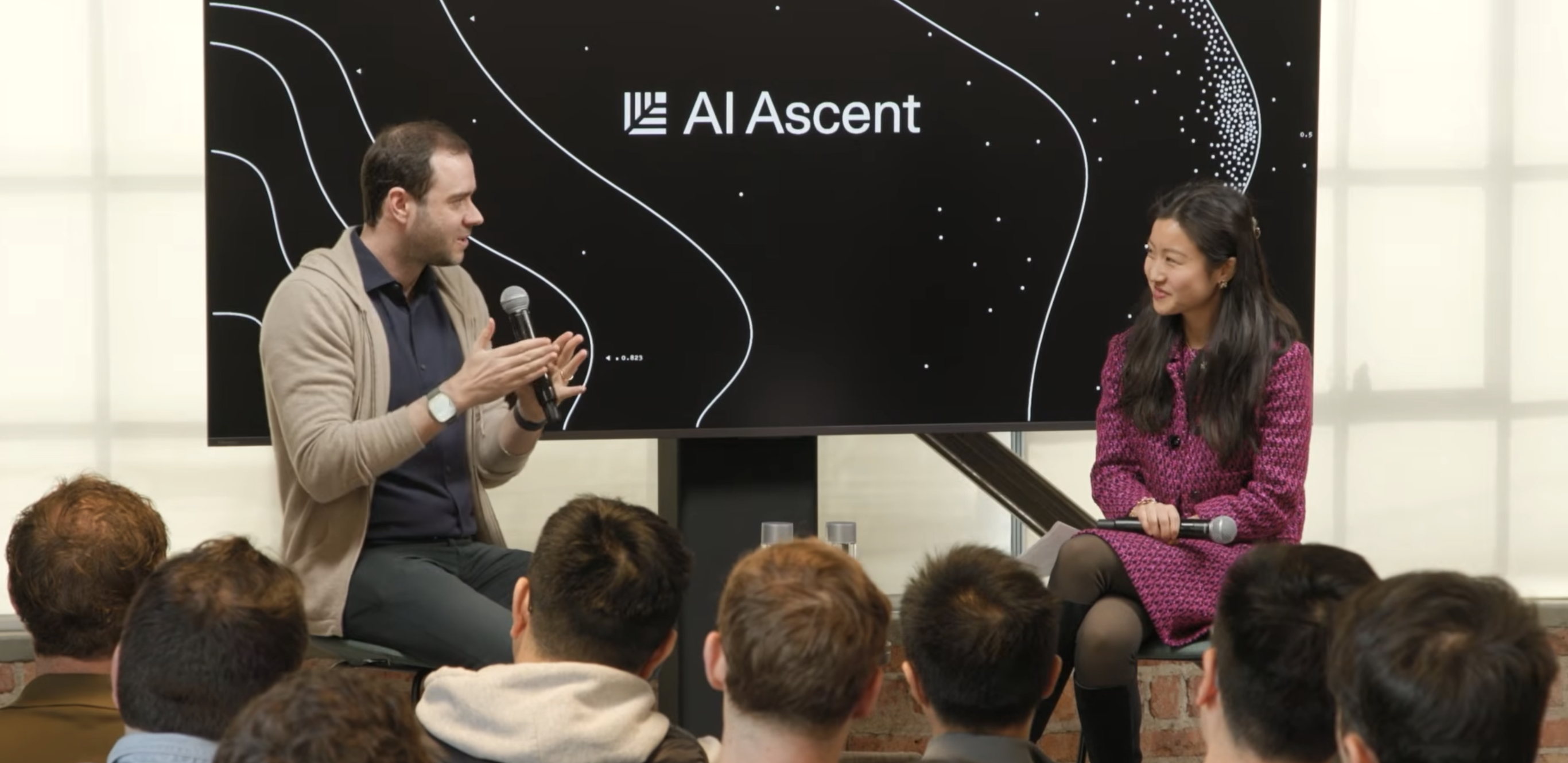
Karpathy coined the term "vibe coding" to describe a new way of building software: setting a directional intent and letting an agentic system execute, rather than writing individual lines of code by hand. The shift is more abrupt than most people appreciate. For years, developers used AI as an accelerated autocomplete — helpful, but still requiring heavy manual revision. Then, at a specific moment in late 2024, the latest model iterations began outputting large, coherent code blocks that actually ran. The psychological effect on experienced engineers was a dual mixture of exhilaration and genuine unease. People who had spent years developing syntax fluency suddenly found that the barrier to producing working software had dropped to near zero. The consequence was an explosion of half-finished side projects — not because developers lost motivation, but because starting something new became so frictionless that finishing it felt almost beside the point.
Software 3.0
Karpathy maps the history of programming across three phases. Software 1.0 is traditional code — explicit manual rules written by humans. Software 2.0 is deep learning — programming by curating datasets, defining objectives, and training neural weights. Software 3.0 is the prompting paradigm, where the context window is the primary lever over an LLM that executes computations directly in a digital information space. The critical implication is that the traditional application layer is becoming optional. A system that previously required an API server, an OCR pipeline, and an image generation stack can now be replaced by passing a raw photo to a multimodal model and prompting it to render the output directly onto the pixel grid. The engineers still reaching for frameworks and UI wrappers are solving a problem that, in many cases, no longer exists.
Jagged Intelligence and the Startup Opportunity
AI capabilities are not uniformly distributed — they spike in domains with clear algorithmic verifiability and flatten in domains that lack it. Karpathy calls this jagged intelligence. Frontier labs can hook verifiable tasks — chess, coding, mathematics — directly to reinforcement learning loops, where the model receives unambiguous feedback and improves rapidly. Tasks that require common-sense physical reasoning, like whether to drive to a car wash 50 metres away or walk, can still fail in ways that seem absurd. The practical advice for founders follows directly from this: don't compete with frontier labs on general model capability. Instead, identify a narrow domain with a high-value, verifiable output, build a proprietary RL loop around it, and use fine-tuning to reach a level of specialisation that a general model won't prioritise. The escape velocity available in a well-chosen niche is real.
Vibe Coding Is Not Agentic Engineering
Karpathy draws a hard line between vibe coding as a democratisation tool and agentic engineering as a professional discipline. Vibe coding raises the floor — it lets non-technical people build functional prototypes. Agentic engineering is something more demanding: orchestrating stochastic, non-deterministic AI agents to build systems that are secure, maintainable, and architecturally sound. The gap between the two is significant, and most engineering organisations haven't updated their hiring frameworks to reflect it. Interview processes still test syntax recall rather than a developer's ability to specify, direct, and audit a network of autonomous agents. Karpathy's proposed replacement is blunt: give candidates a large project, deploy adversarial agents to actively attack and break their production environment, and evaluate how they respond.
You Can Outsource the Thinking, Not the Understanding
The deepest point in the conversation concerns what happens as the cost of raw intelligence approaches zero. Karpathy's argument is that the final bottleneck is not intelligence but understanding. An engineer who uses AI agents to generate code without deeply comprehending what the code does gradually loses the ability to direct it accurately, evaluate whether the output is correct, or determine what is actually worth building in the first place. AI excels at processing, translating, and reprojecting information. It does not possess understanding in any meaningful sense. The engineers and founders who compound fastest in this environment are those who use AI to generate multiple perspectives on a problem and then do the hard cognitive work of integrating them — amplifying their own domain understanding rather than outsourcing it.