The IPO Isn't a Race
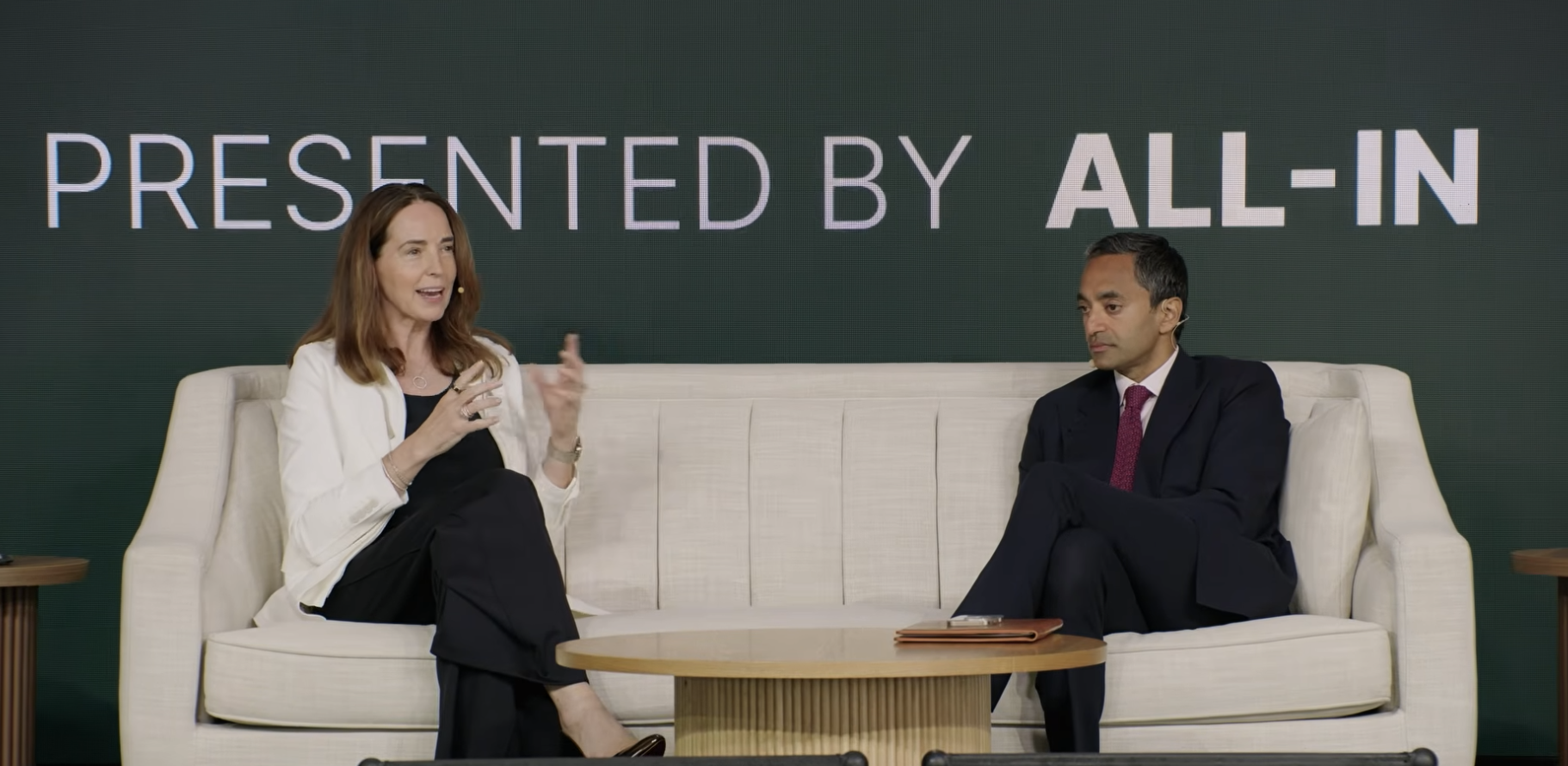
Friar was direct on the question of going public before Anthropic or SpaceX: it doesn't matter. Her framing was that markets are weighing machines, not popularity contests. Google went public after Yahoo and still won. Uber went public before Lyft and the result wasn't determined by the listing date. OpenAI raised $122 billion in its most recent round — the mechanics of that capital raise were about maximising optionality, not signalling momentum. The IPO comes when it makes structural sense, not when it makes a good headline.
900 Million Users and the Engagement Ladder
ChatGPT now has over 900 million weekly active users, with Africa as the fastest-growing continent. But the more revealing number is what happens as users move up the pricing tiers. Free users send around seven queries a day. Pro users — paying at the top tier — send 77. That eleven-fold jump in engagement per paying user is the commercial engine: more usage drives more data, which improves the model, which lowers the cost per token, which funds more compute. Consumer and enterprise revenue are currently running roughly even at 50/50.
There Is Essentially No New Compute Available in 2026
The supply chain reality Friar described is stark: there is virtually no net-new compute capacity available to purchase this year, and 2027 is heavily constrained. The bottlenecks rotate — sometimes raw power generation, sometimes zoning approvals, sometimes high-bandwidth memory, sometimes the engineers to run the facilities. OpenAI is currently breaking ground on a one-gigawatt Oracle data centre in Michigan, contributing $1 billion in local taxes and 2,500 union jobs to secure the political capital needed to get it built. Their capital modelling is focused on 2030 to 2032, because 2026 to 2028 is already spoken for.
The Cost of Intelligence Fell 97% in Two Years
The financial paradox at the heart of OpenAI's strategy: physical infrastructure costs are rising — land, copper, concrete, power — while the algorithmic cost of extracting intelligence from that infrastructure is collapsing. The cost per token dropped roughly 97% between GPT-4 and the current generation of models. Friar's argument is that pricing and capital allocation decisions made on today's cost profile will be completely wrong by 2030. The company has to model against the deflationary curve of intelligence, not the current sticker price of a server rack.
Why Advertising Is Part of the Plan
Anthropic called out OpenAI publicly for signalling a pivot toward advertising. Friar didn't retreat from it. Her case: an ad-subsidised tier is the only financially viable way to deliver free access to users in lower-income markets globally. The guardrails she described are firm — model outputs can never be sponsored, and a paid ad-free tier must always exist. The deeper strategic point is about what OpenAI is actually building: a system that combines the high-intent signal of a search query with deep contextual memory of the user. That combination, she suggested, is structurally more valuable to an advertiser than anything that exists today.