Four Million Images a Day
Planet's satellite constellation captures roughly four million high-resolution images of Earth daily — an archive that stretches back decades and covers everything from Arctic ice sheets to urban sprawl. The challenge has never been collecting the data. It's always been making sense of it at scale, and that's where the partnership with Anthropic enters the picture.
A Vision-Queryable Planet
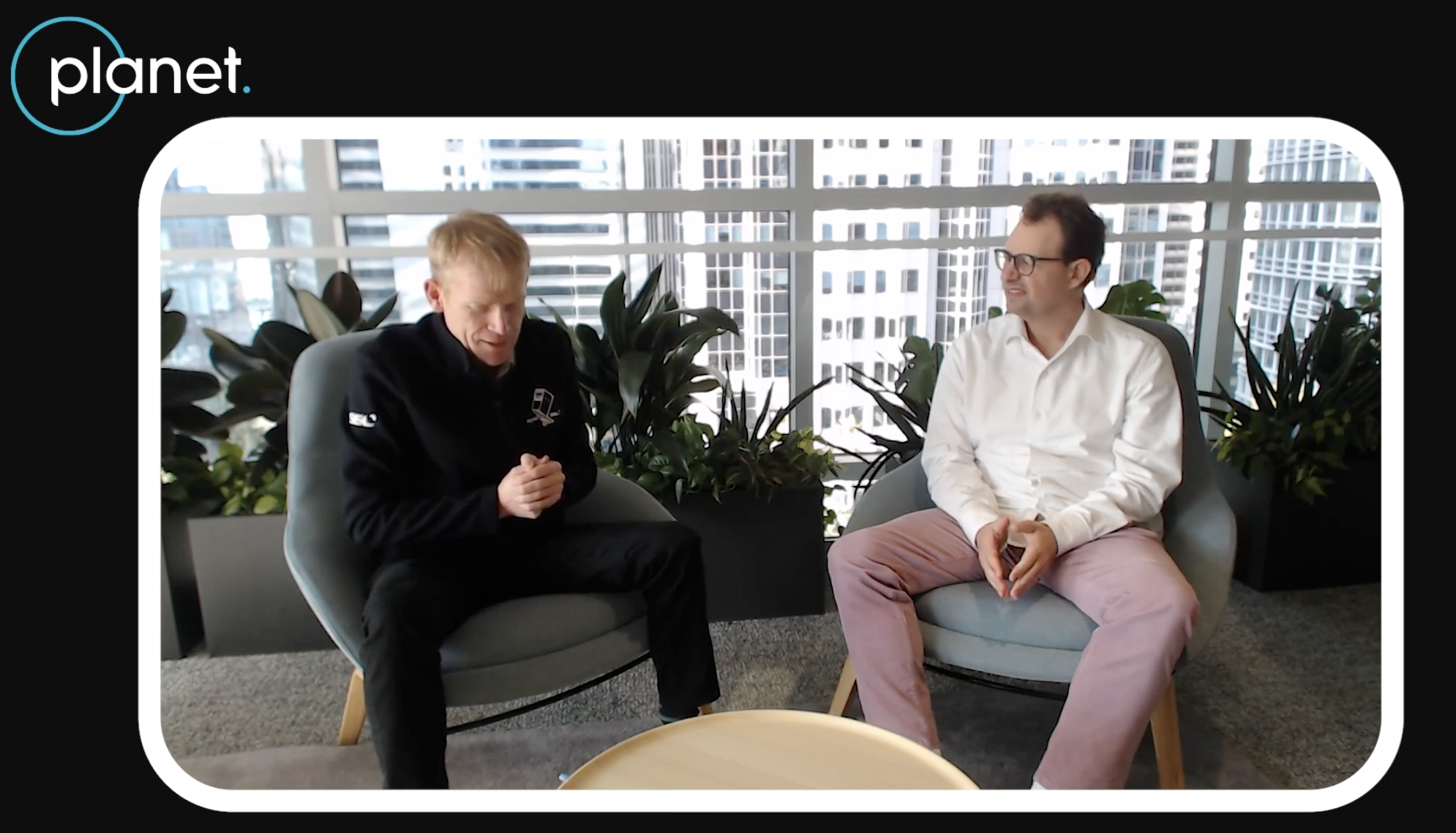
Will Marshall describes the goal as a "searchable Earth" — a system where you could type a natural language question and instantly surface relevant satellite evidence. Want to know where deforestation accelerated in the last six months? Or calculate how much coastline was reshaped by a recent storm? The ambition is to do for visual planetary data what search engines did for text, collapsing the distance between a question and an answer that previously required a team of analysts and weeks of processing.
Why Specialisation Matters
General-purpose AI models are trained largely on internet data, which skews heavily toward everyday imagery. Dario Amodei pointed out that a disproportionate amount of it is simply photos of cats. Satellite imagery is structurally different: top-down, multispectral, and semantically dense in ways that require different pattern-recognition capacities. Fine-tuning Claude on Planet's archive should sharpen its ability to detect features and shifts that a generalist model would miss entirely — the kind of precision that matters when the question involves crop yields or coastline erosion rather than breed identification.
AI as a Climate Double-Edge
Marshall raised a real tension during the conversation: AI accelerates the kind of industrial activity that strains planetary systems. Amodei didn't sidestep it. Both men acknowledged that the same technology capable of deepening environmental harm can also be aimed at climate modelling, clean-energy discovery, and early-warning systems for ecological collapse. As Public Benefit Corporations, they argued they have a legal obligation — not just an aspiration — to prioritise those applications over others where the calculus is less clear.
Decoding Whales, Finding Planets
The conversation ended in speculation that felt less far-fetched than it might have a few years ago. Amodei floated the possibility that transformer architectures — fundamentally pattern-recognition engines — could be trained on marine acoustics to map the communication systems of whales and dolphins. Marshall added the possibility of detecting biosignatures in deep-field planetary data. Both framed the next decade as one of potential Copernican moments, where the boundaries of what we can know shift dramatically and permanently.